 Est. 1537 · For everyone who stays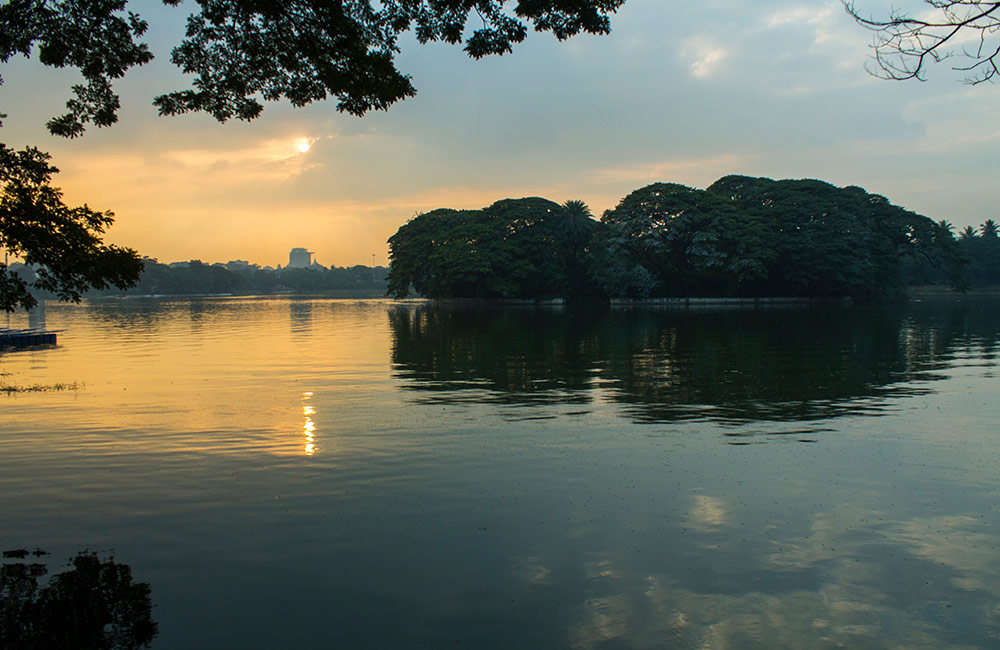
ಹಲಸೂರು
Halasuru.
A lake older than the city around it — and a neighbourhood that still remembers slower Bengaluru mornings.
How it got its nameಇತಿಹಾಸ
The name says it all: Halasuru comes from the Kannada words for jackfruit (halasina hannu) and village (ooru) — a dense jackfruit grove once stood here long before the city arrived. The neighbourhood predates modern Bengaluru itself, built around a lake that Kempe Gowda II originally constructed to feed local farmland in the 16th century. When the British arrived, Commissioner Lewin Bentham Bowring expanded and renamed it Ulsoor Lake to supply water to the new military cantonment — and the anglicised name has stuck ever since.
Under British rule, Halasuru becomes a key military and administrative district. Tamil-speaking soldiers, artisans and traders are brought in from Madras Presidency to build and serve the garrison — giving the neighbourhood its distinct bazaar streets, wider-than-usual roads, and one of the oldest Sikh gurudwaras in the city on the lake's western bank. The Madras Sappers (MEG) make their permanent home here, and their museum on Kensington Road still preserves a remarkable relic: a four-foot Chinese bell, cast in 1741 and captured during the Opium Wars.
Today the lake remains the anchor. Morning walkers circle the promenade at sunrise while office traffic surges toward MG Road and Indiranagar nearby. Halasuru feels suspended between eras — part ancient settlement, part cantonment relic, part central-city spillover — held together by the stillness of the water at dawn.